A photo log of seven days in Seoul and Busan with my two nieces and nephew — a trip that had been on the calendar for two years, delayed once by political turmoil, and finally happened this June. Everyone had a job going in: my nephew wanted to shop for figures, my younger niece wanted to shop for skincare, my older niece wanted architecture, and I mostly wanted to watch three very different generations experience the same country three very different ways.
We pick a destination every year based on whatever my nephew is currently obsessed with, and for two years running that obsession was South Korea. Last year’s trip fell through when the political situation got shaky; this year it finally happened. My older niece flew in separately from India, and we all met up at the hotel on arrival day, jet-lagged and mostly just excited to have pulled it off.
Korea
Seoul
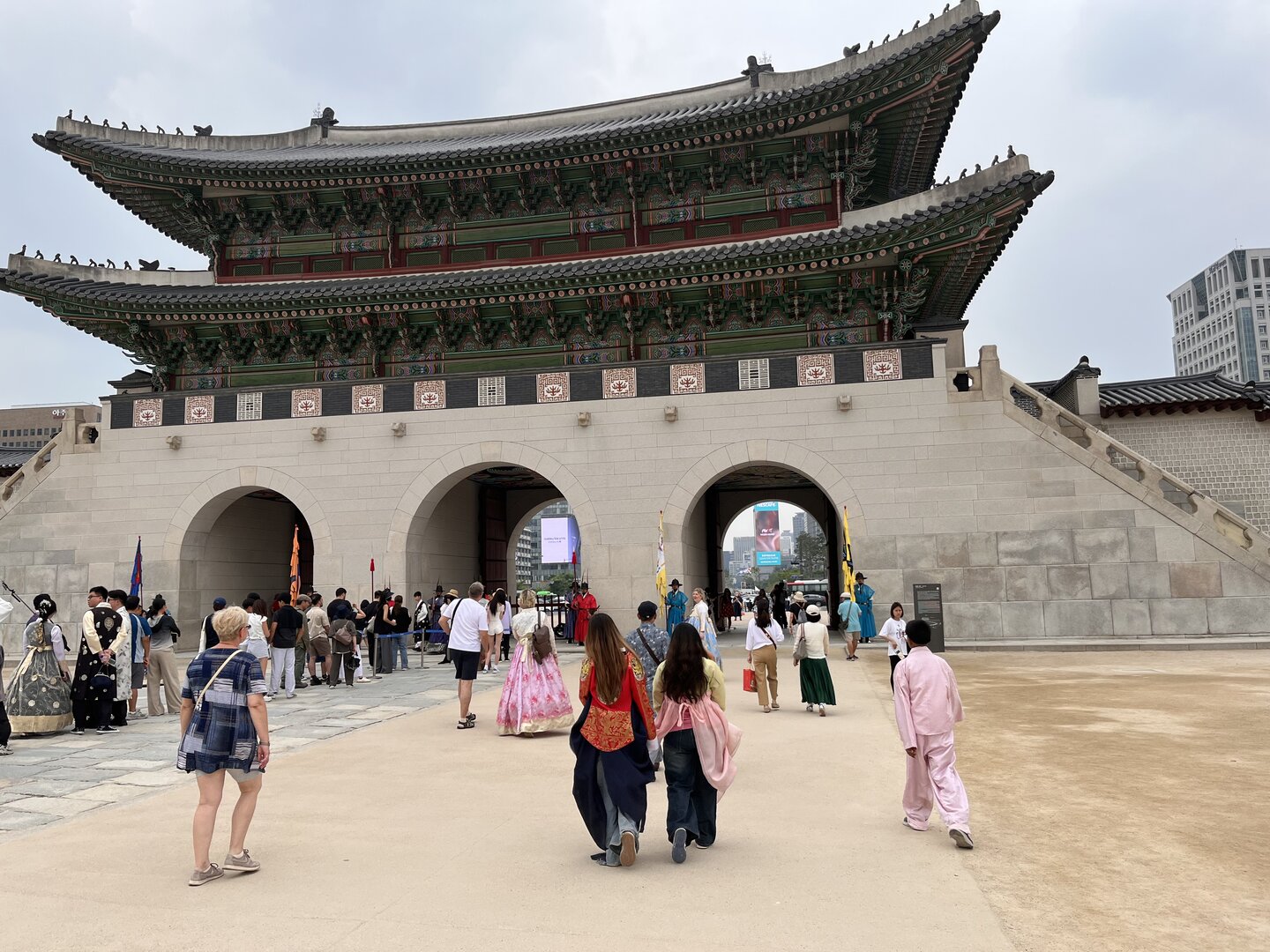
Gyeongbokgung, in Hanbok
Day one, and we went straight for the postcard shot: hanbok rental and a walk through Gyeongbokgung Palace, the seat of the Joseon dynasty and still the clearest single answer to “what does traditional Korea look like.” My older niece — the quiet one, more interested in structure than selfies — spent most of the visit looking at rooflines instead of cameras. It was an early hint of a theme that would pay off six days later.
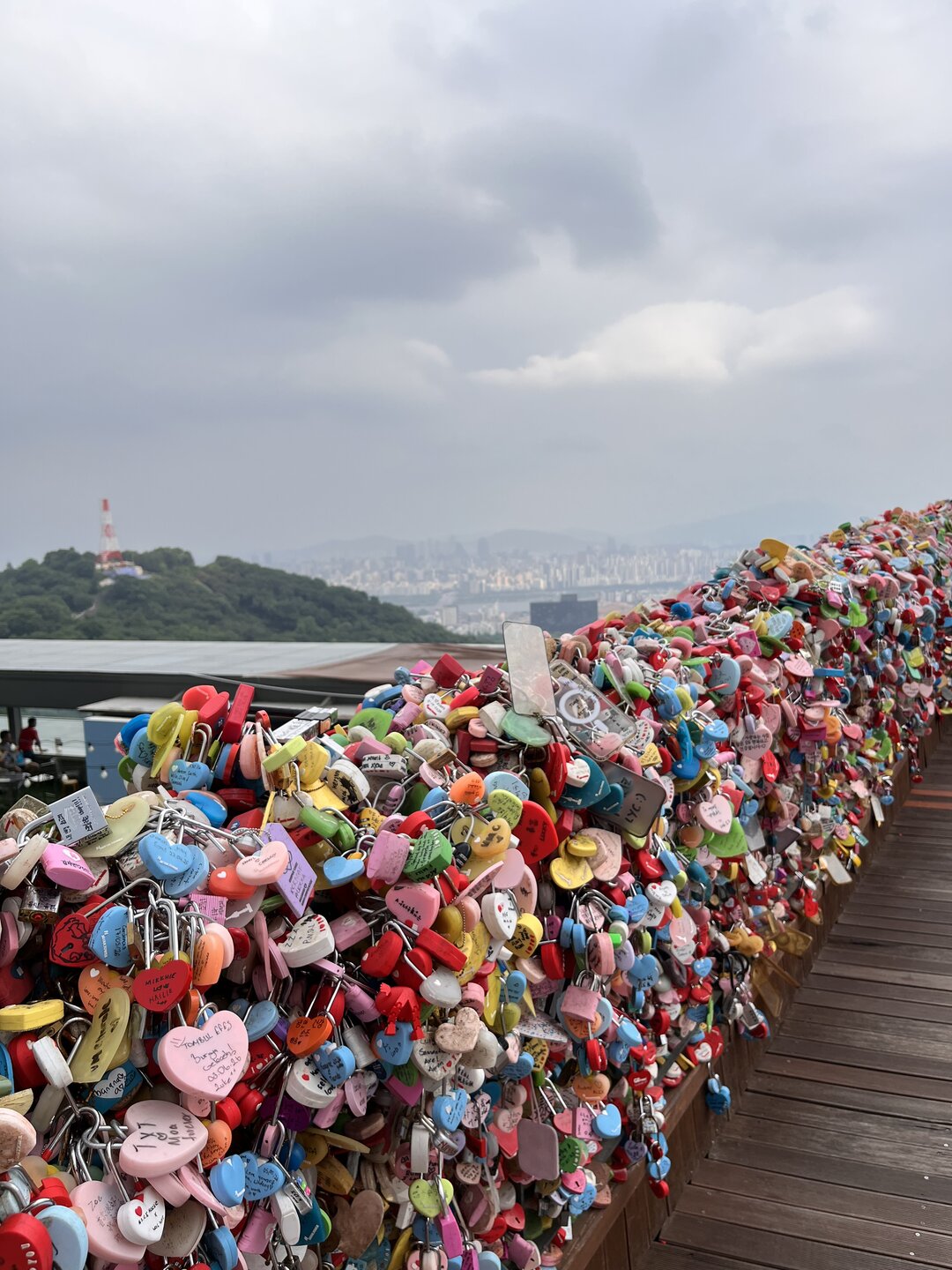
The Locks at N Seoul Tower
From the palace we made our way up Namsan to N Seoul Tower, where the fence around the observation deck is buried under thousands of padlocks — couples, friends, families, all locking in a wish and losing the key on purpose. My nieces were completely entranced, reading every message they could find scratched or Sharpie’d onto the metal. It’s the kind of low-tech, high-sentiment tourist ritual that somehow still works on a generation raised on group chats.
We closed day one with dinner at the Myeongdong night market, working through skewers and street food in the kind of dense, neon-lit alley that makes you understand why Myeongdong shows up in every “must-see Seoul” list. We’d be back here on our very last night, without knowing it yet.
A Parade, and a Shopping Day
Day two started with a genuine surprise: a traditional Korean dance parade came right past the hotel entrance as we were heading out — drums, fans, hanbok in motion, the whole thing. Great, unplanned welcome to what was billed as our designated shopping Friday.
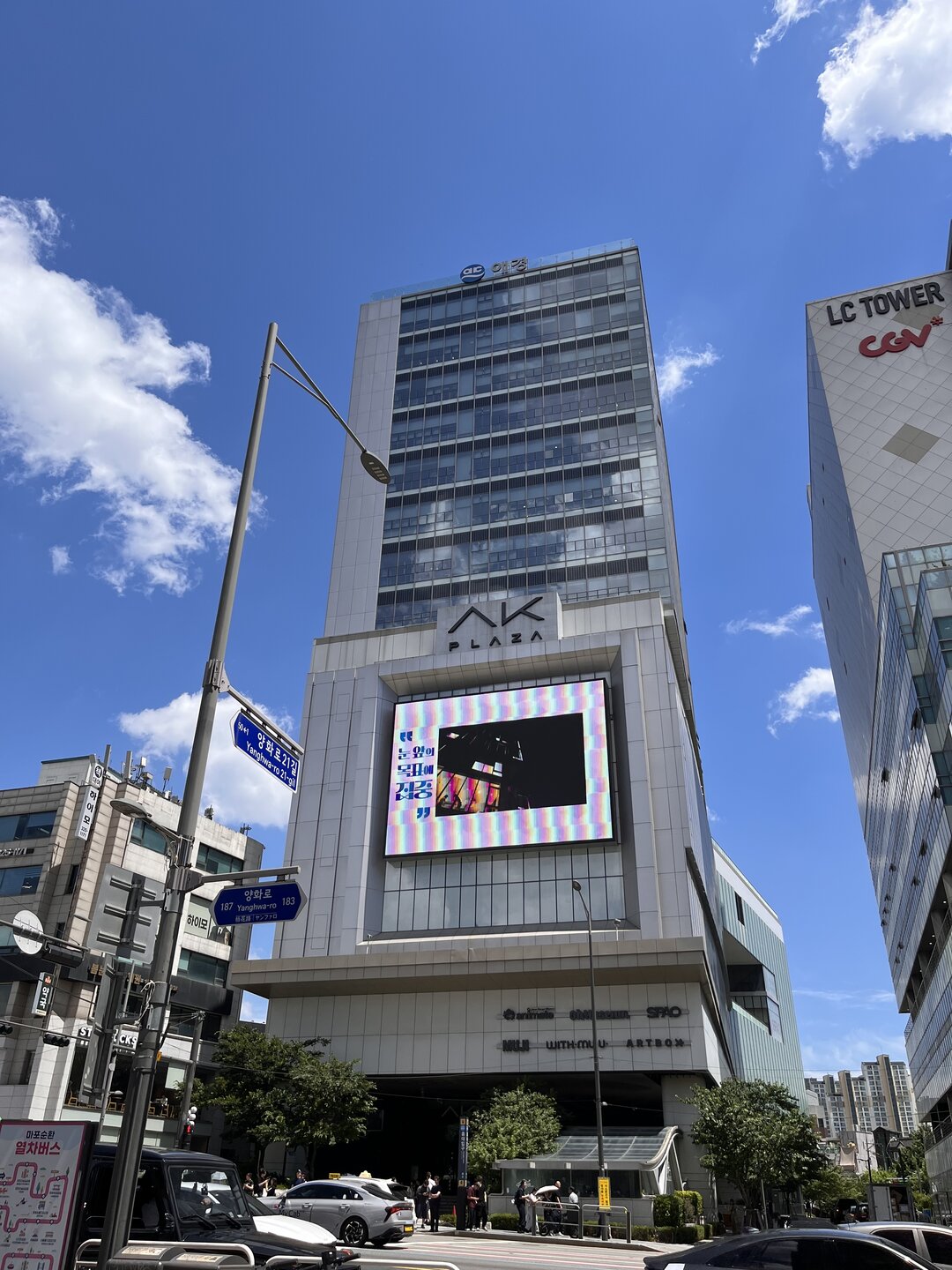
We headed to AK& Hongdae, in the neighborhood built around Hongik University’s art-school energy — think street performers, indie boutiques, and enough gachapon machines to bankrupt a twelve-year-old. This was my nephew’s day. Somewhere in that mall he found the piece he’d talk about for the rest of the trip: an S.H.Figuarts Dracule Mihawk figure, from One Piece. He is a full generation younger than his sisters, wants absolutely nothing to do with being photographed, and lit up more over a hinge joint on a plastic sword than over anything else on the itinerary. Different generation, different currency of excitement — noted, and it would come up again.
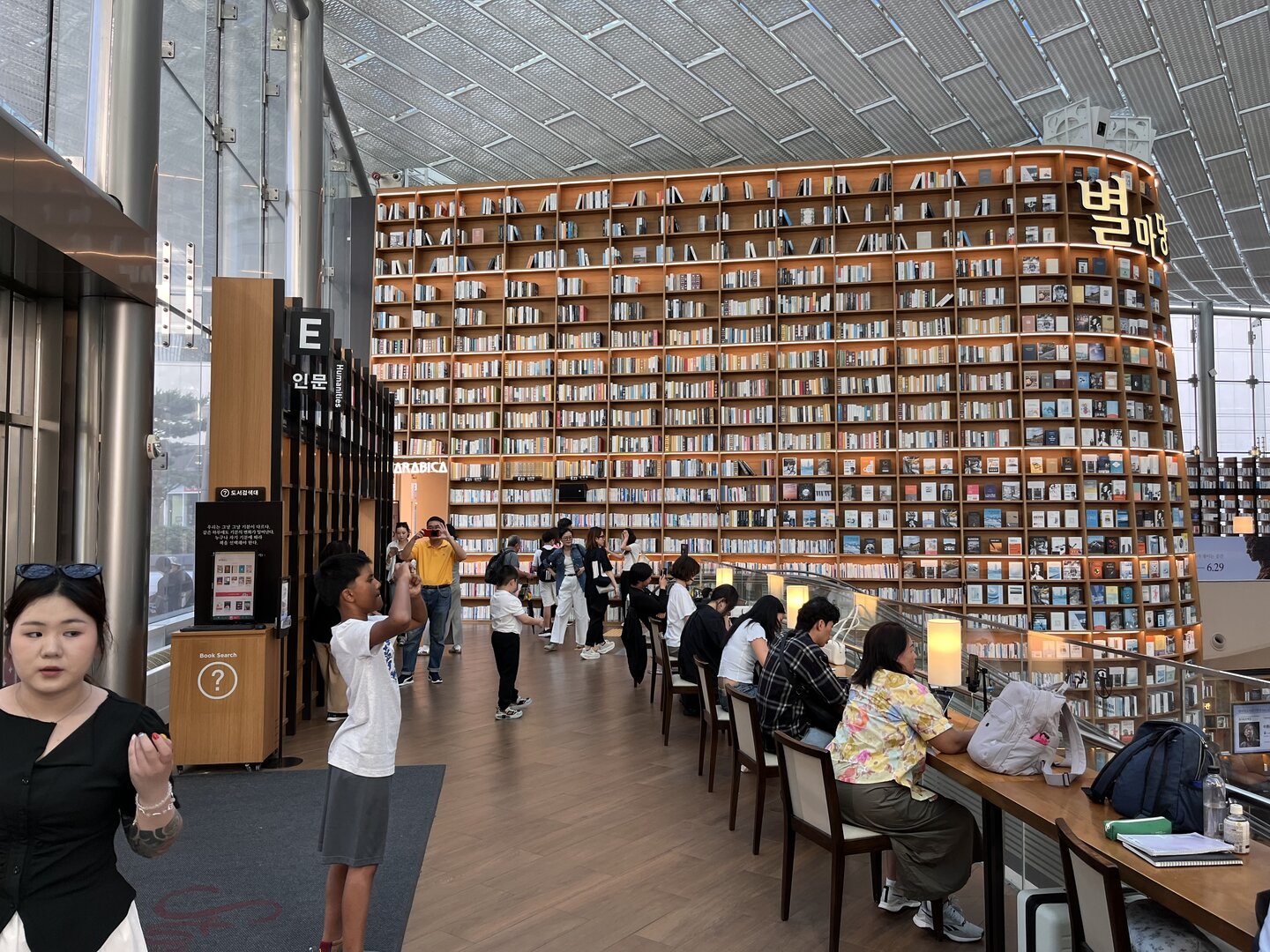
Starfield Library, and the K-Pop Skyline
In the evening we went to COEX Mall in Gangnam for the Starfield Library — two floors of open bookshelves rising past a mezzanine, built as much for the photograph as for the reading. It’s also, not coincidentally, blocks from SMTOWN’s COEX storefront and underneath one of the giant public LED screens Gangnam is known for — the kind of oversized, always-on digital signage that makes the neighborhood feel like the physical set of a K-pop music video. Korea exports culture and hardware in the same breath, and nowhere is that more obvious than standing in Gangnam at dusk.
Banpo Bridge, Lit Up
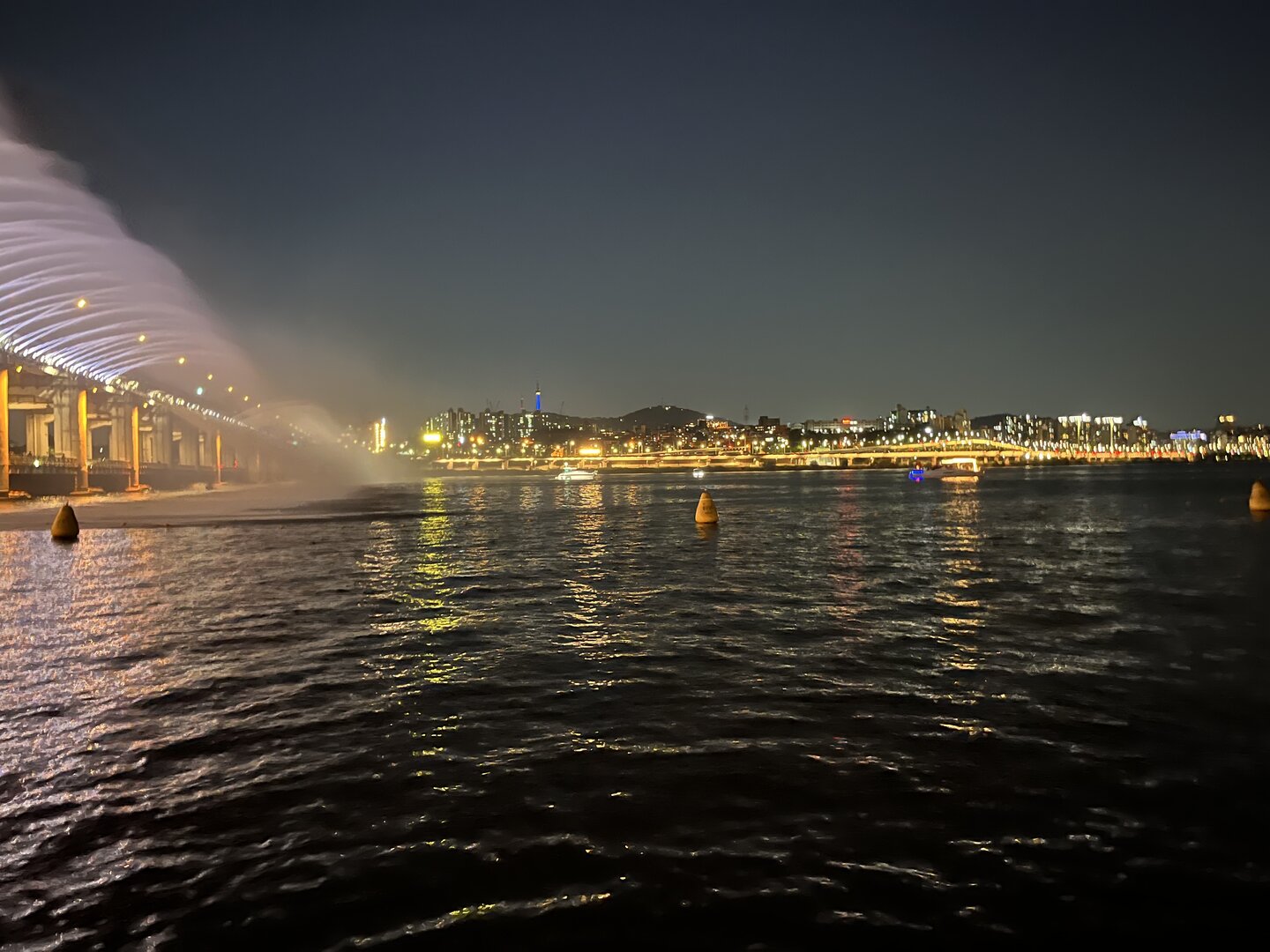
We ended the night at Banpo Bridge for the Moonlight Rainbow Fountain — the longest bridge fountain in the world, pumping recycled Han River water back over the bridge in synchronized, LED-lit arcs. It’s a strange, wonderful bit of civil engineering built purely for spectacle, and it’s free, and it runs every night. Very on-brand for a country that treats infrastructure as a stage.
An Actual Memorial Day
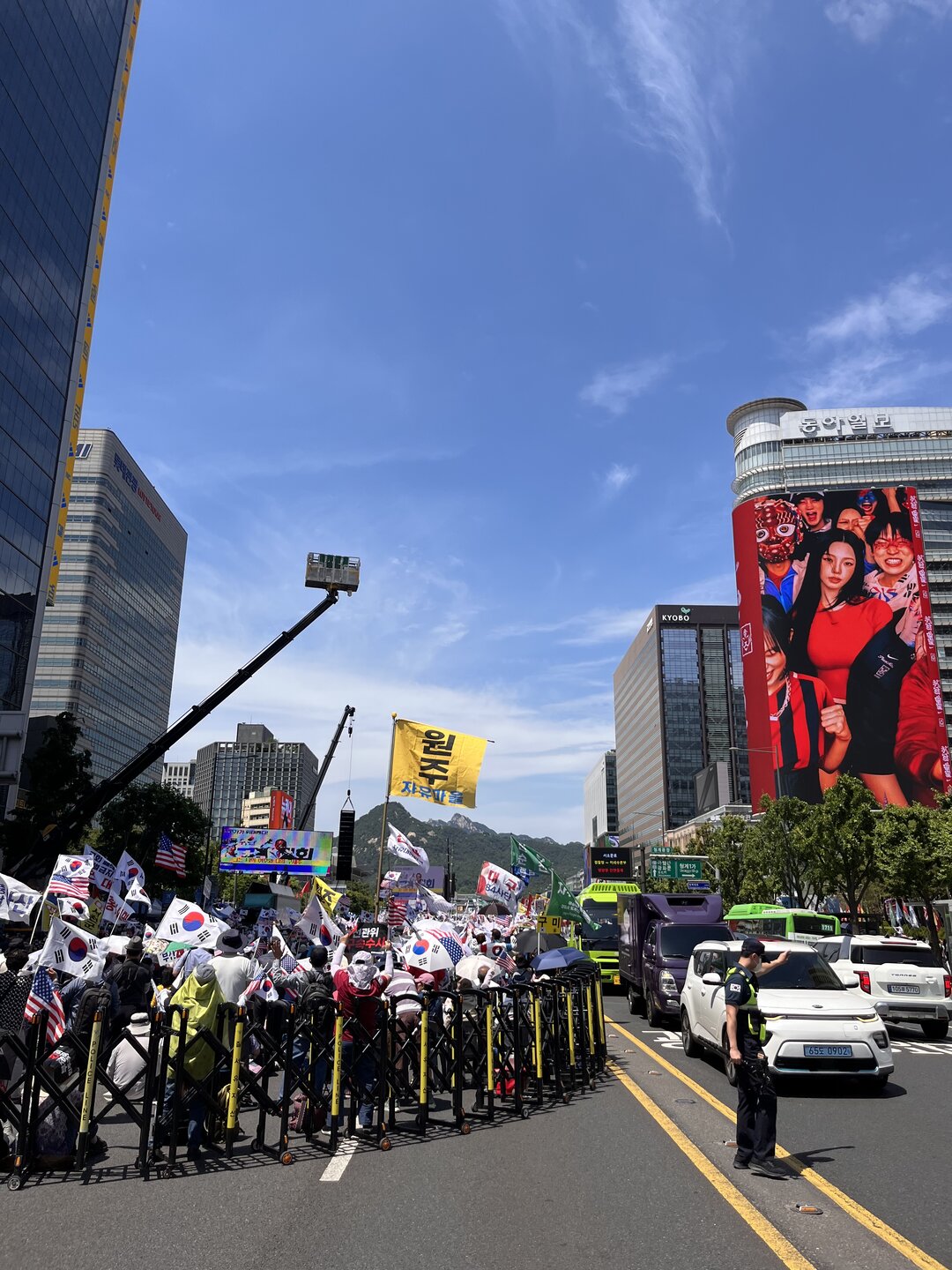
Day three opened with another parade outside the hotel — bigger this time, more formal, flags and uniforms and visible dignitaries. It took us a minute to realize we’d stumbled into something real: June 6th is Hyeonchung-il, Korea’s national memorial day for its war dead, observed with ceremonies at Gwanghwamun every year. We hadn’t planned around it; we’d just happened to be standing in the right square on the right morning.
Busan
The KTX Through Gyeongju
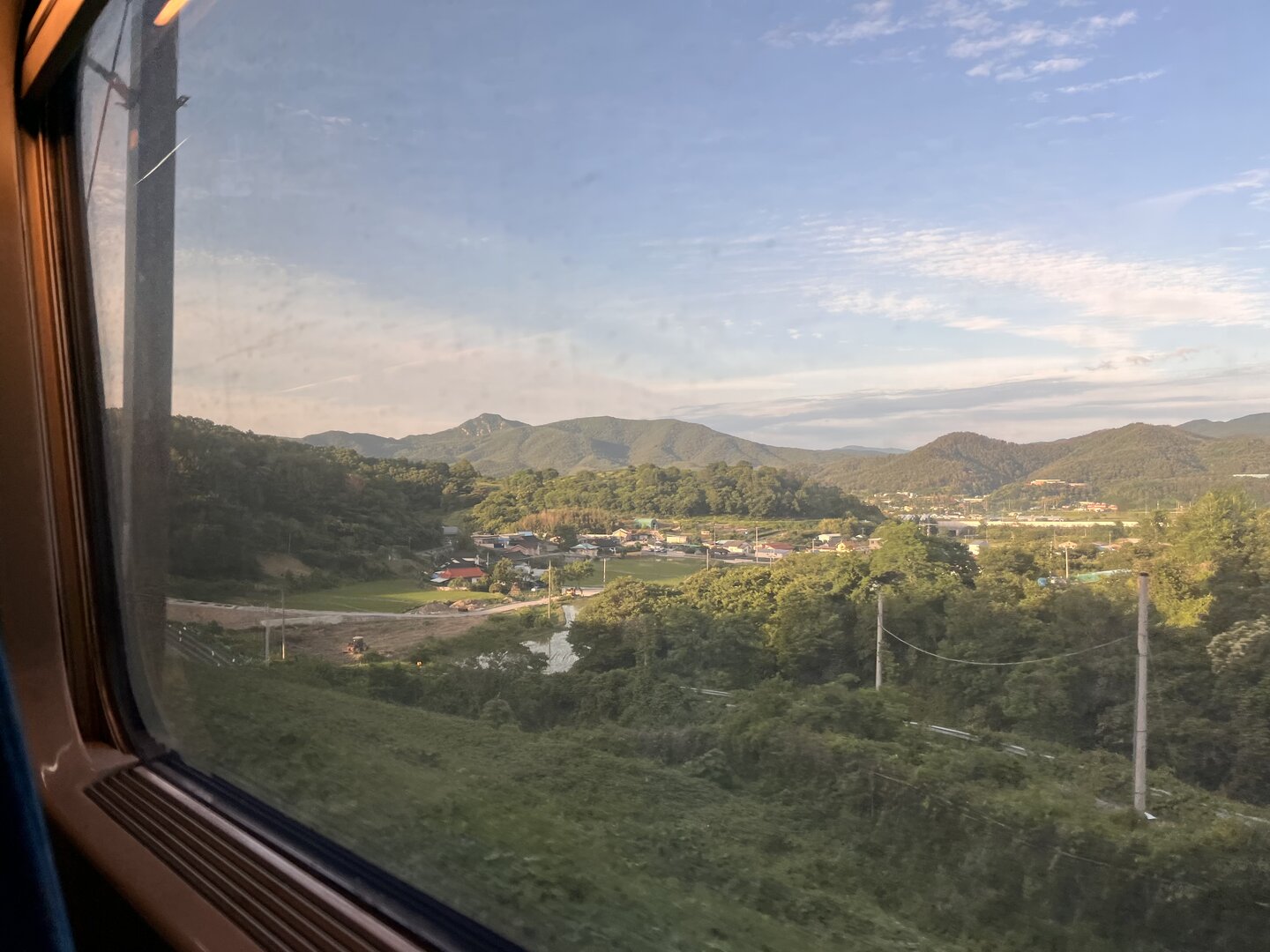
That afternoon we took the KTX south to Busan — Korea’s high-speed rail is the kind of infrastructure that makes you quietly resentful of every train you’ve ever taken in the US. The route runs right past Gyeongju, the capital of the old Silla kingdom, which felt appropriate: we were tracing the same north-south spine that Korean history has run along for over a thousand years, at 300 km/h.
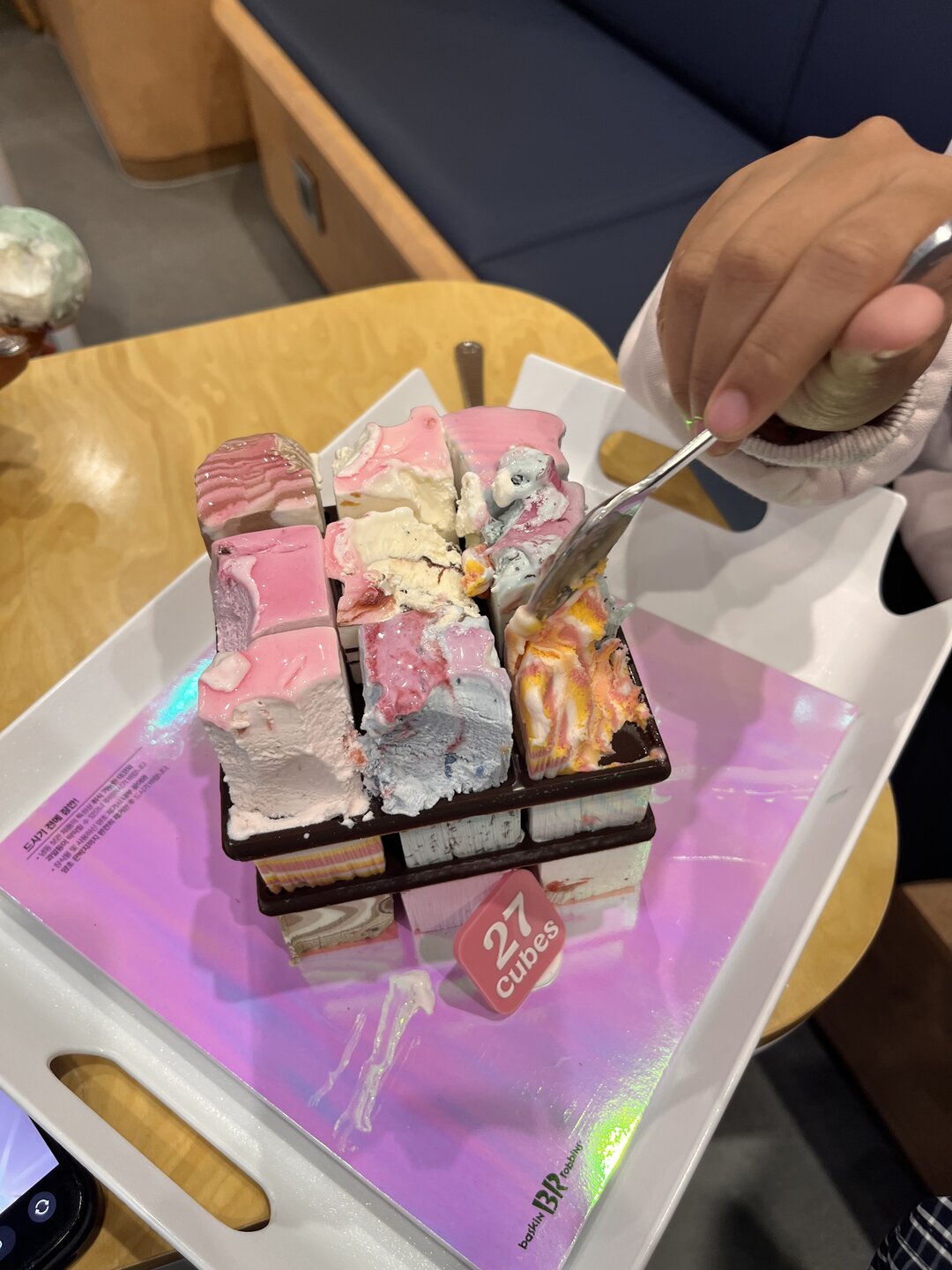
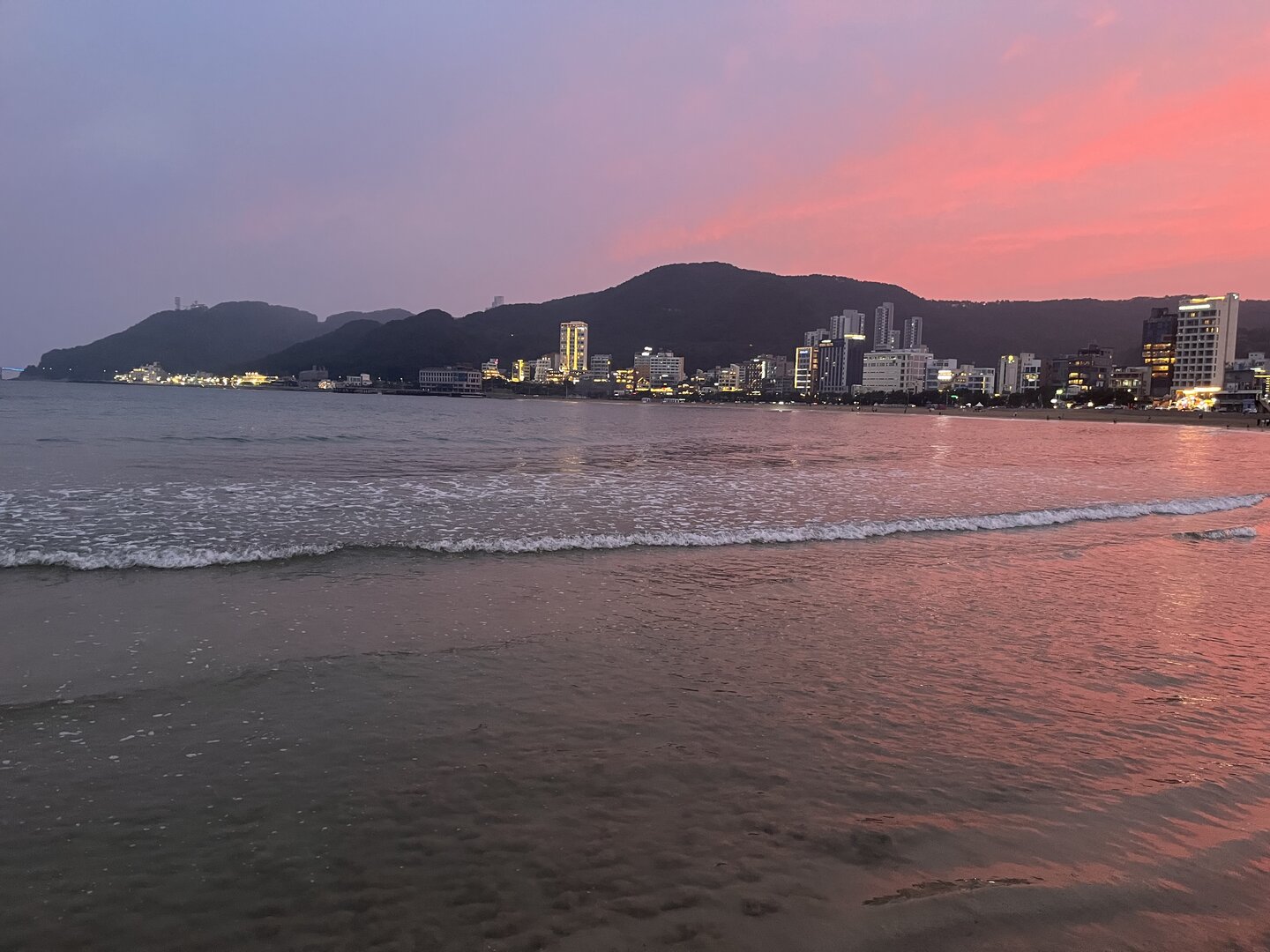
We landed in Busan late, and instead of going straight to the hotel we walked out to Songjeong Beach for cake and a night walk along the water — a soft, low-key start to the part of the trip that was really about slowing down.
Lunch at a Temple on the Water
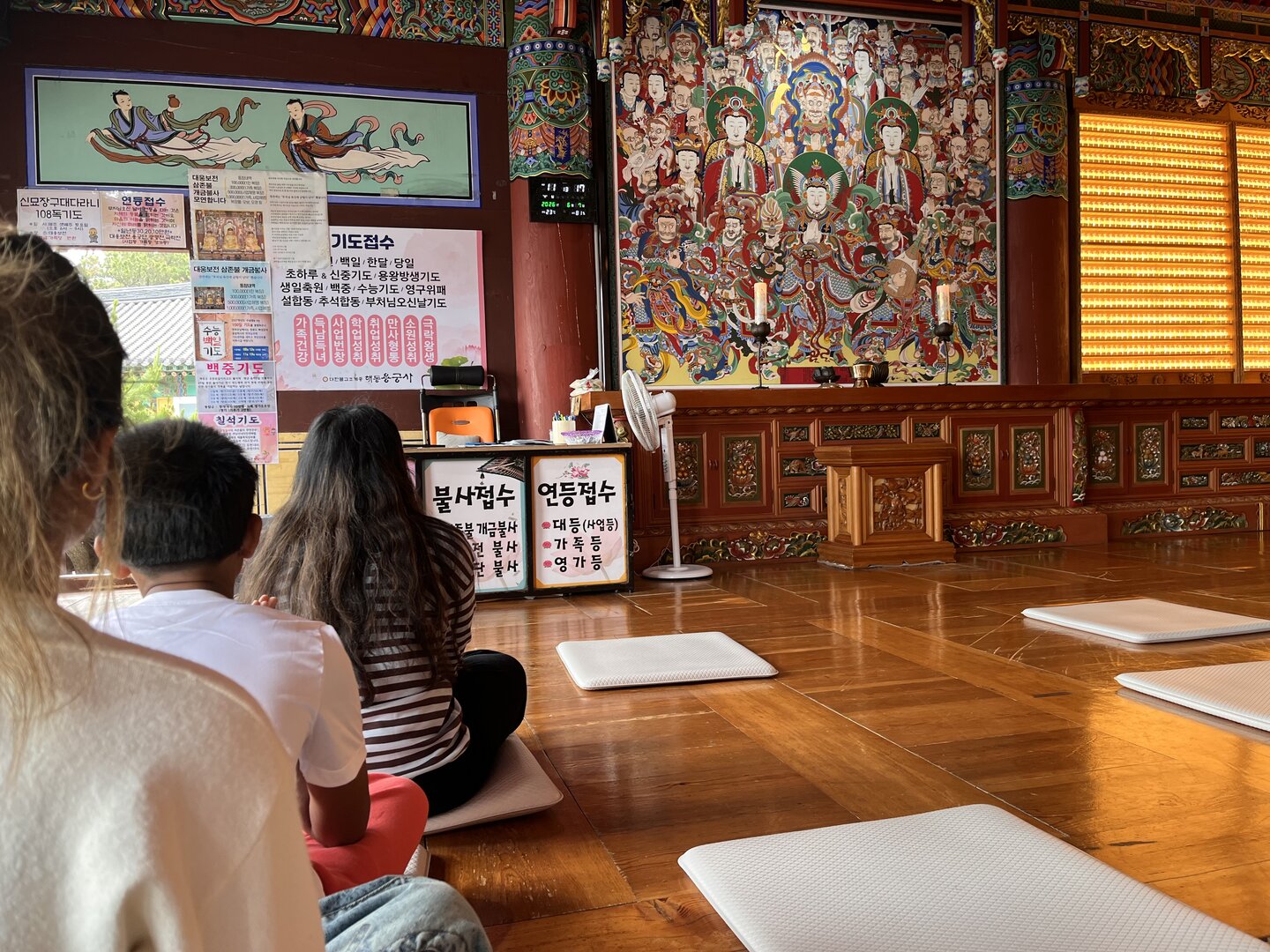
Day four, we went to Haedong Yonggungsa — one of the only major Buddhist temples in Korea actually built on the coast rather than tucked into the mountains, waves breaking against the rock right below it. It was calm in a way that’s hard to manufacture on purpose. We had lunch there, and it turned out to be one of the best vegetarian meals of the entire trip — proof that temple food doesn’t need meat to be memorable, it just needs someone who’s been perfecting the same recipes for centuries.
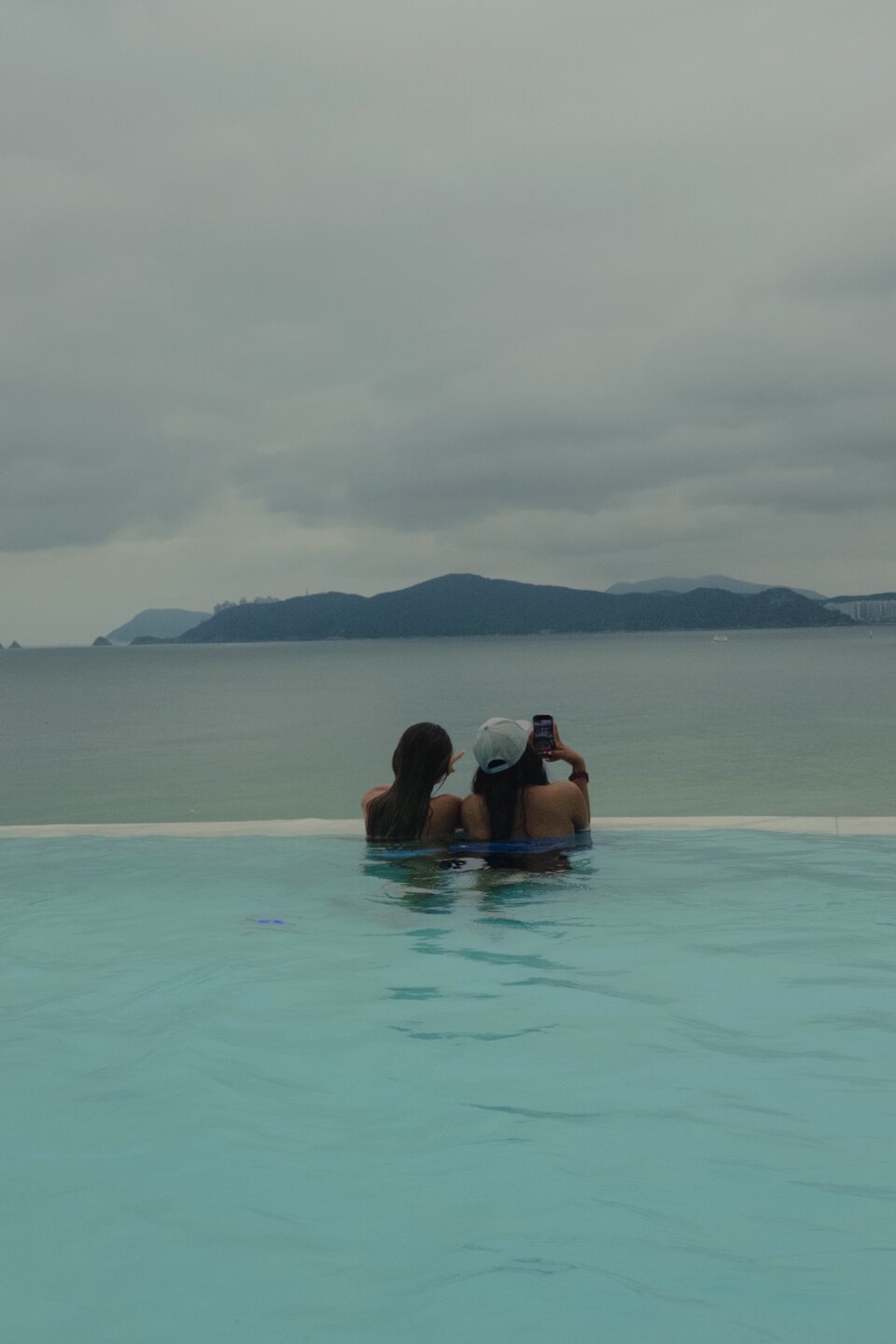
In the afternoon we swapped serenity for chaos at Club Oasis, a water park up in Haeundae — exactly the kind of loud, slide-heavy detour a mixed-generation trip needs to keep everyone happy at once.
Haeundae at Dusk
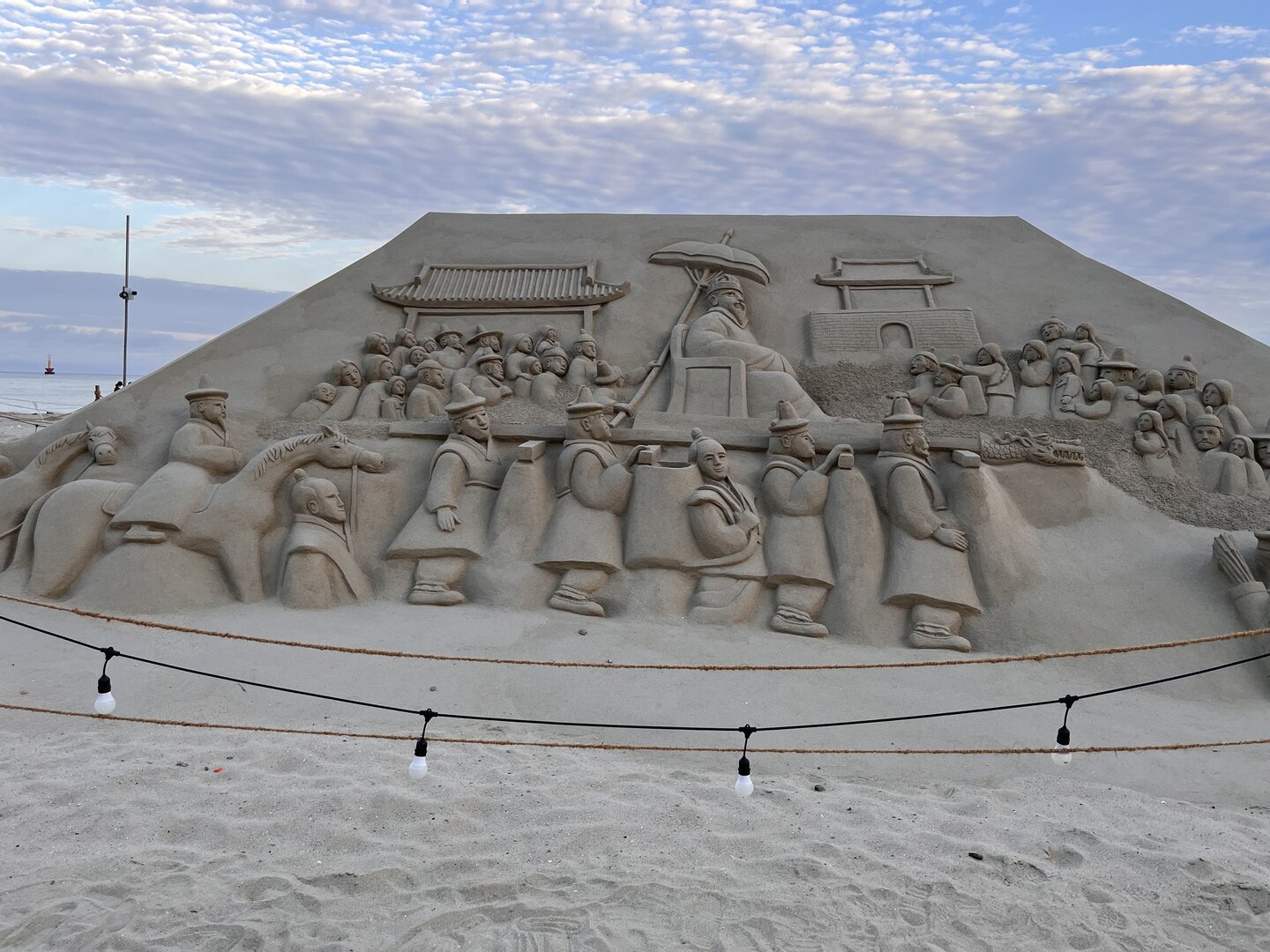
By evening we were at Haeundae Beach itself, where a modern dance performance and a sand-art installation had drawn a crowd right on the sand. This is also where the trip’s funniest generational split really showed up: my nieces filmed a TikTok built entirely around a meme about Korean milk, layering in props and bits from everywhere we’d been — pure GenZ travel grammar, where the souvenir isn’t the photo, it’s the edited fifteen-second video. My nephew wanted absolutely no part of being on camera and would much rather have been home bending the joints on his new Mihawk figure. Same trip, same day, two completely different definitions of “content.”
We had a genuinely great Indian dinner in Busan that night — a reminder that even on a trip built around Korean food, sometimes what you want most is something familiar, and Busan delivers on that too.
Gamcheon, and a Cable Car Over the Water
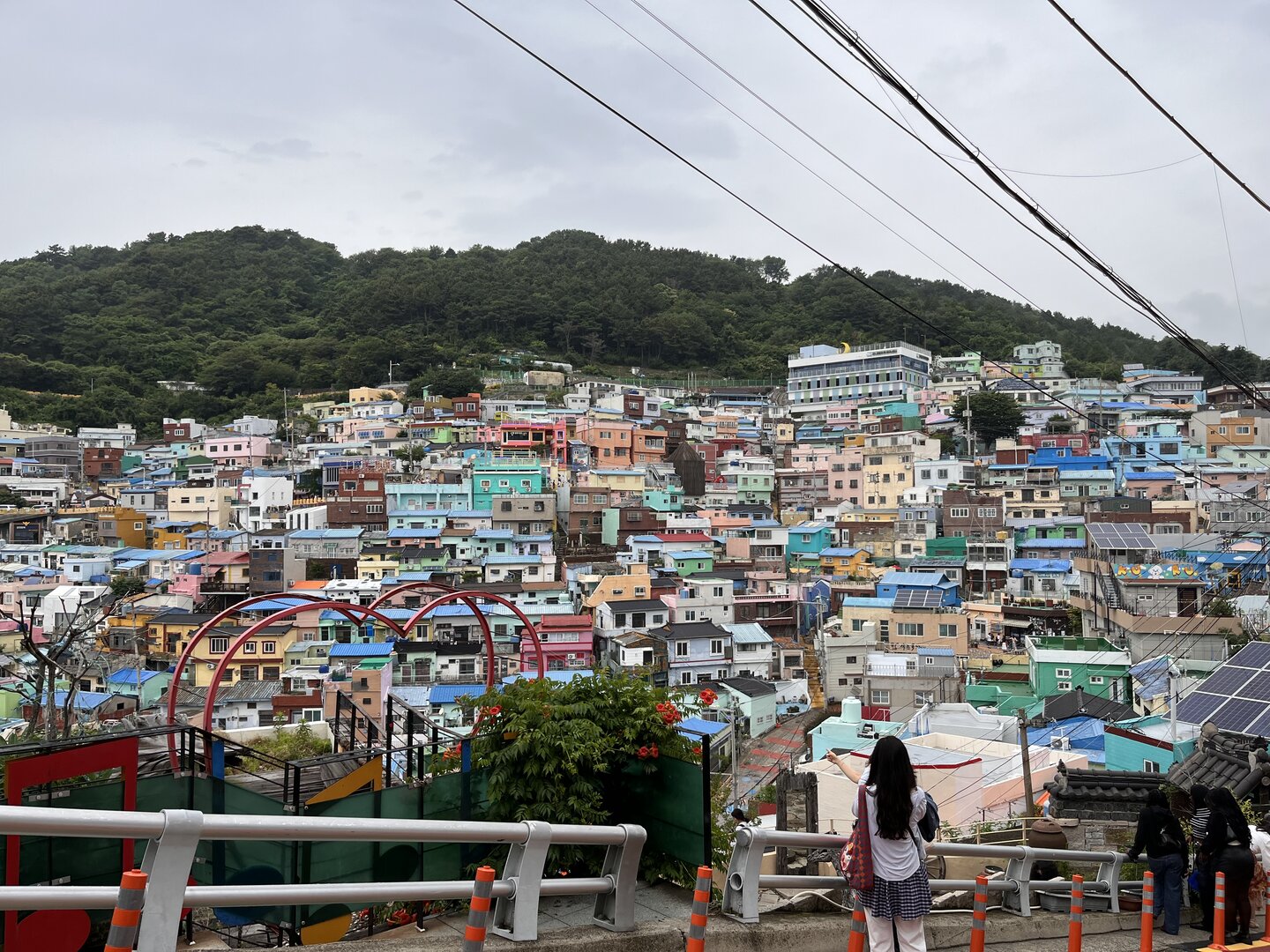
Day five started early at Gamcheon Culture Village, the terraced, candy-colored hillside neighborhood that’s become one of Busan’s most photographed spots — its own patch of houses stacked up a hillside like a Pixar concept sketch, each one painted a different color. It’s also a real neighborhood people live in, which somehow makes the murals and installations feel earned rather than staged.
In the afternoon we rode the Busan Air Cruise — the cable car out to Amnam Park from Songdo Beach, including a stretch in a glass-floor gondola directly over the water. Simple concept, executed with the kind of confident, slightly over-engineered polish that Korean infrastructure seems to default to.
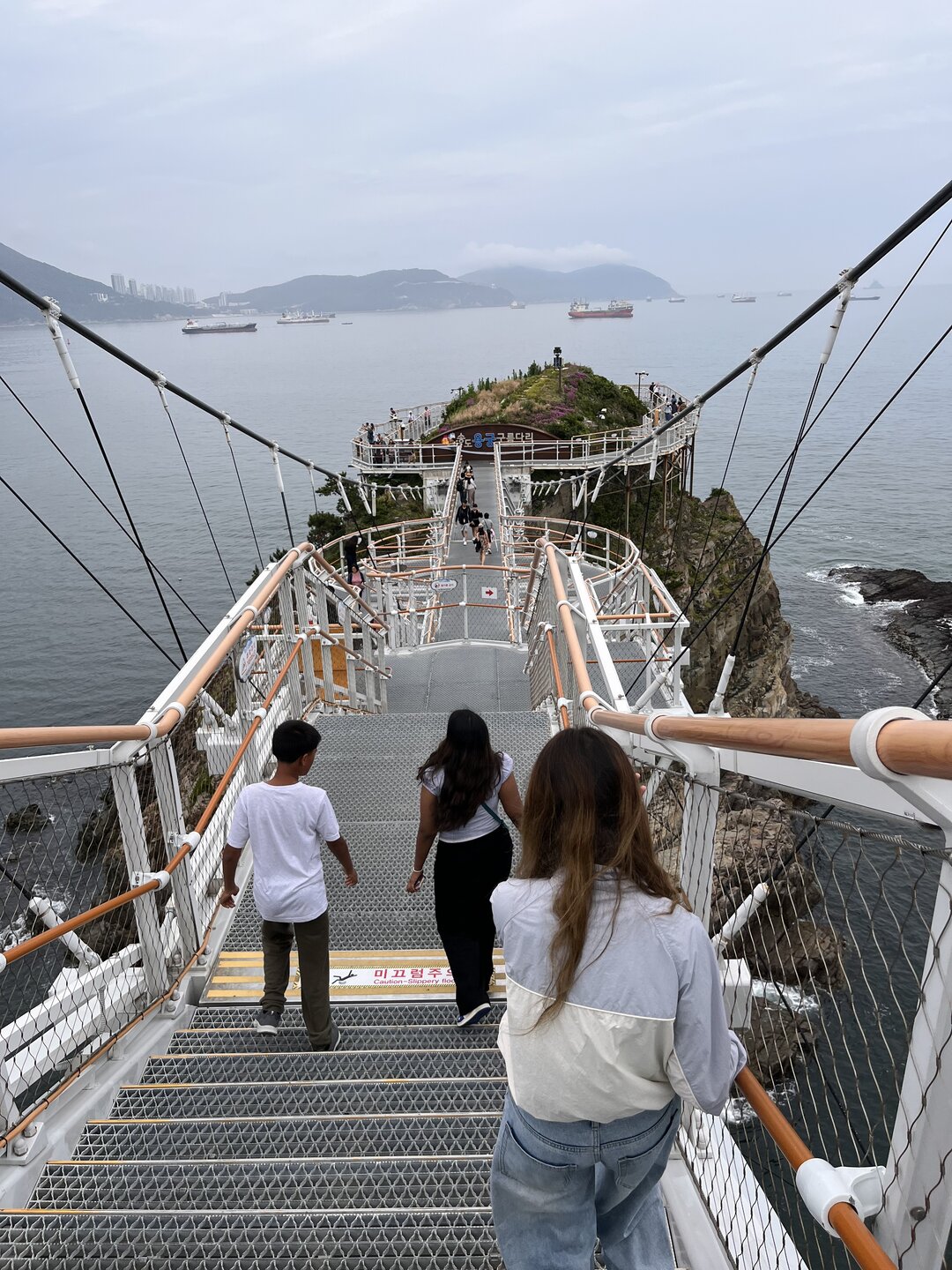
We closed out the day back on Songjeong Beach, near Haeundae, just sitting with the water as the sun went down — no itinerary, no landmark, just the last quiet evening of the Busan leg.
Seoul
A Highway That Became a River
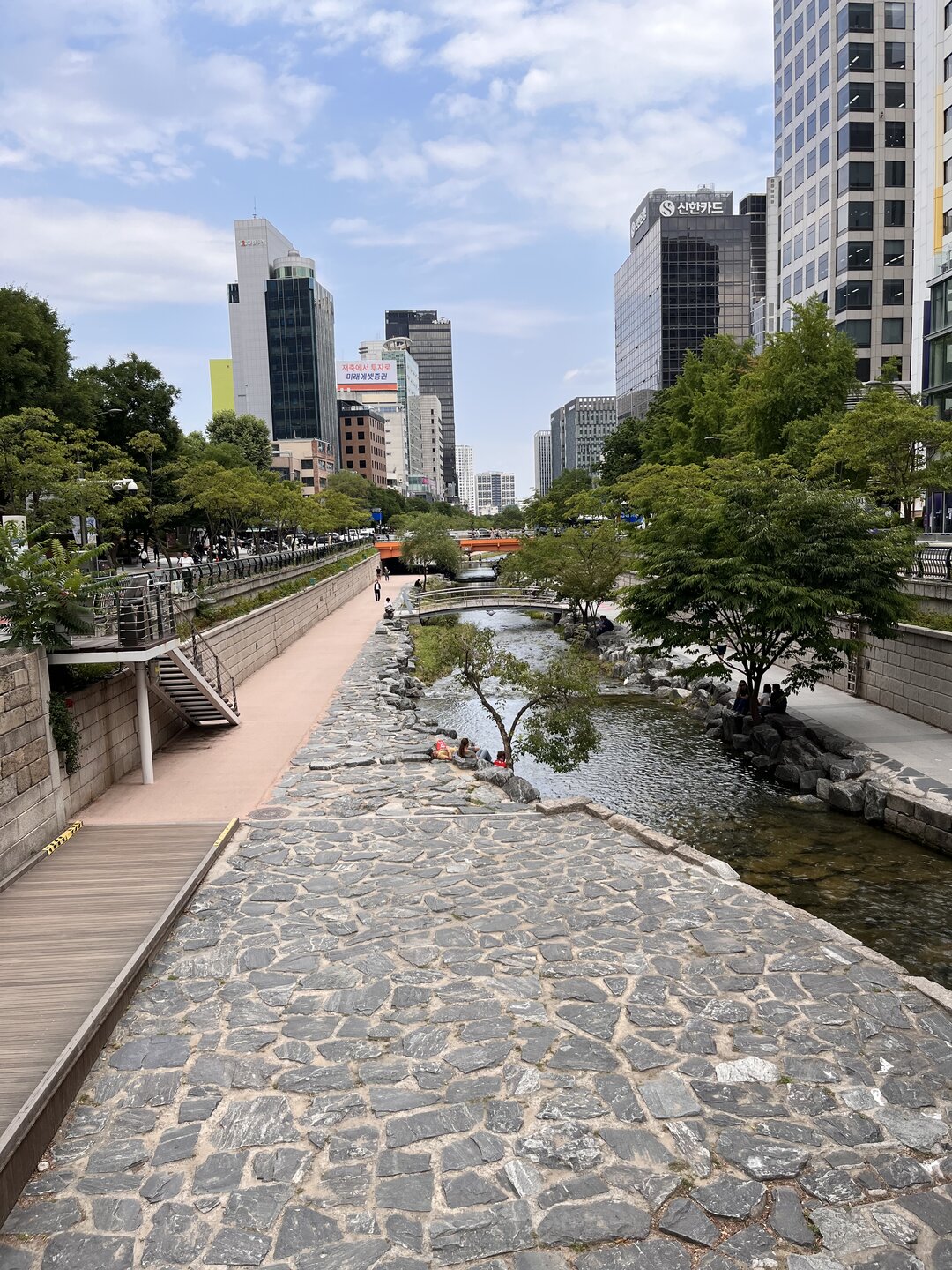
Day six, back in Seoul by train, and we walked along Cheonggyecheon — the stream that runs through the middle of downtown, sunk below street level, lined with stone and greenery. For decades this was the Cheonggye Elevated Highway, a raised expressway that buried the original stream entirely; in the early 2000s the city tore the highway down and restored the water underneath it instead of building over it again.
My older niece — lady of few words, most of the trip — stopped, looked at it for a while, and said, “Mama, this is lovely. A big lesson in modern architecture.” Then she told us this was the inspiration to build an app that does exactly what Cheonggyecheon does physically: let you see the difference between what a place used to be and what it is now. That idea is what became TimeLens — she promised she’d help build out the comparison between old and new, and in this case, she was right: the difference was overwhelmingly for the better.
Last Day of Shopping
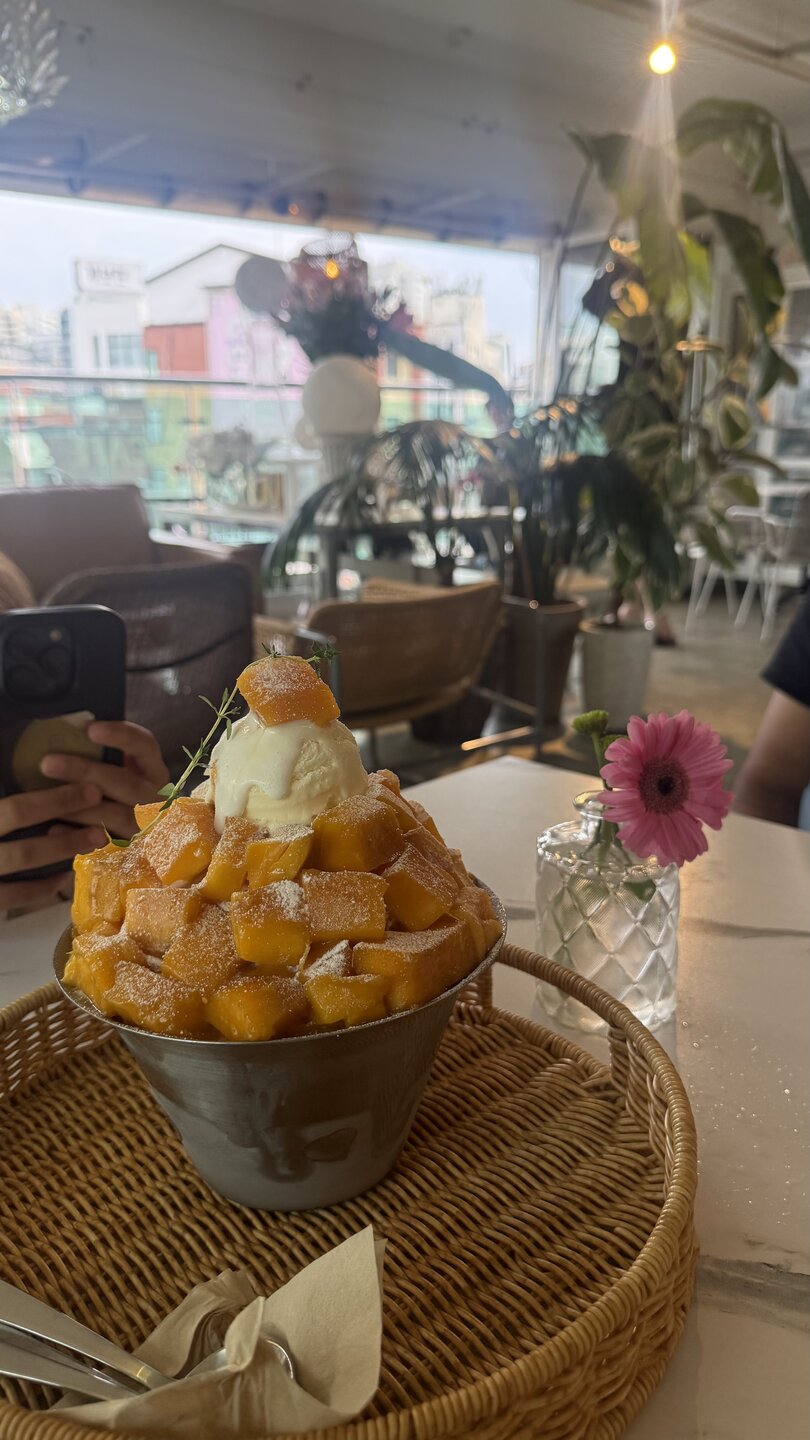
The rest of day six was my younger niece’s turn: an afternoon dedicated to cosmetics shopping, broken up with a bingsu stop — shaved ice piled absurdly high with fruit and syrup, the only sane response to a Seoul summer afternoon spent going store to store.
We ended the day, and the trip, back where we’d started it — Myeongdong, this time for souvenirs instead of street food. Dinner was a Chinese vegan hot pot that turned out to be the single best meal of the whole week, which felt like a fittingly random way to close out a trip built on food discoveries we hadn’t planned for.
The Shopping Haul
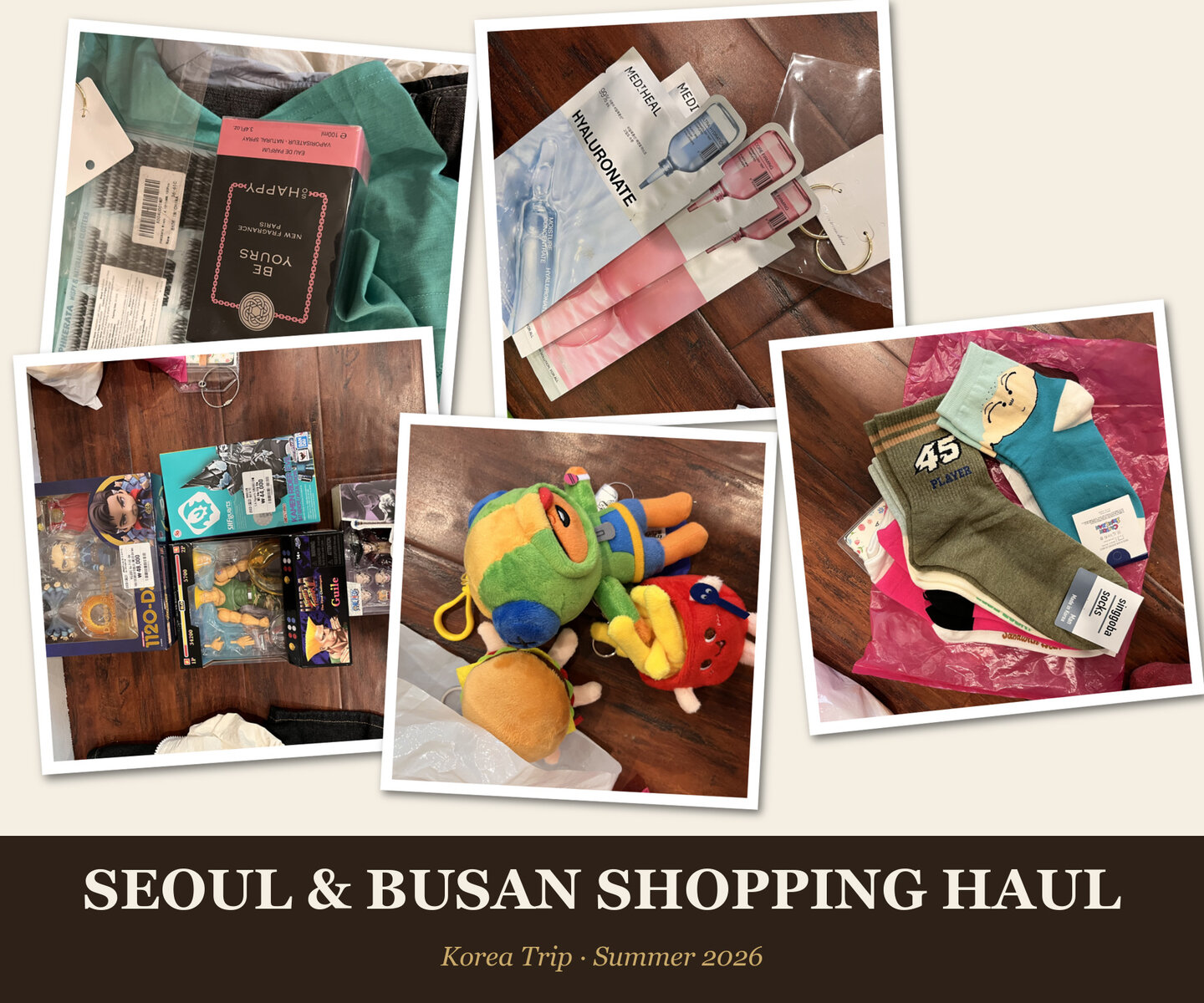
Between all four of us, here’s what came home: action figures (Mihawk holding the title, obviously), a new perfume, a couple of pairs of earrings, socks with more personality than most adults, a set of keychain plushies nobody can name but everybody loves, and enough sheet masks and skincare ampoules to last until the next trip.
The next morning we took the hotel bus to the airport. My older niece flew back to Mumbai; my younger niece, my nephew, and I flew direct to San Francisco. Three generations, one country, and three very different souvenirs — a TikTok, a bendable figure, and an app idea that’s still getting built.
A huge thank you to my nephew for picking the destination two years running, and to my nieces for putting up with a very packed itinerary of palaces, beaches, and shopping malls in roughly equal measure.